
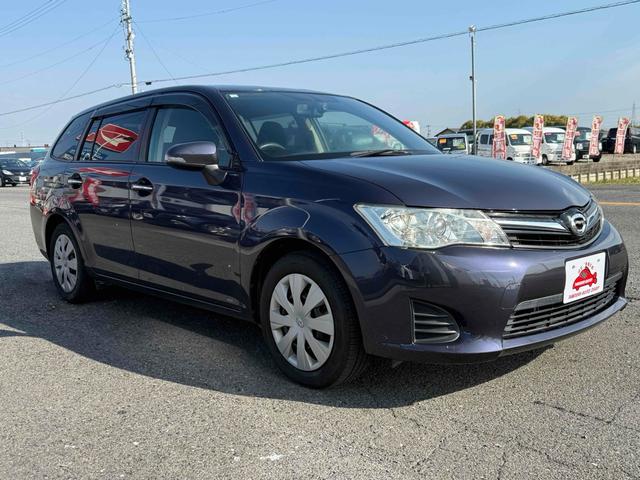
Corolla Fielder 1.8S Aerotourer (front-wheel-drive)
The Corolla Fielder 1.8S Aerotourer combines wagon versatility with Toyota durability, offering a smooth CVT drivetrain, efficient 1.8-liter engine, and roomy interior suitable for family or utility use.
The Corolla Fielder 1.8S Aerotourer combines wagon versatility with Toyota durability, offering a smooth CVT drivetrain, efficient 1.8-liter engine, and roomy interior suitable for family or utility use.
Why is Corolla Fielder 1.8S Aerotourer (front-wheel-drive) better than the average?
Corolla Fielder 1.8S Aerotourer (front-wheel-drive) Specifications
General Information
Make
What is the brand of the car?
The manufacturer of the vehicle, which influences brand recognition, reliability ratings, and dealership network.
Model
What is the model of the car?
The specific name of the car series, which defines its core characteristics and market position.
Trim Level
What is the trim or variant?
A specific version of a model with a particular set of features, engine, and options. (e.g., Base, Sport, Luxury, Off-Road).
Model Year
What is the model year?
The year designated by the manufacturer, which may differ from the calendar year of production. It indicates the generation and feature set.
Body Style
What is the car's body style?
The shape and configuration of the car's body. (e.g., Sedan, Coupe, Convertible, SUV, Hatchback, Wagon, Pickup Truck, Minivan).
Country of Origin
Where was the car company founded?
The country where the car brand is headquartered, often influencing design philosophy and engineering.
Assembly Location
Where was the car assembled?
The location of the factory where the car was built, which can affect build quality and local economic impact.
Engine & Performance
Engine Type
What type of engine does it have?
The configuration and number of cylinders. (e.g., Inline-3, Inline-4, V6, V8, Boxer-4, W12). Affects smoothness, sound, and power delivery.
Displacement (Liters)
What is the engine displacement?
The total volume of all the cylinders in the engine, measured in liters. Larger displacement generally means more power and torque, but lower fuel efficiency.
Aspiration
How does the engine get its air?
Naturally Aspirated (N/A): Relies on atmospheric pressure. Turbocharged: Uses exhaust gas to spin a turbine and force more air in. Supercharged: Uses a belt-driven compressor. Affects power and throttle response.
Horsepower (hp)
What is the peak horsepower?
A measure of the engine's power output. Higher horsepower generally means higher top speed and faster acceleration.
Torque (lb-ft)
What is the peak torque?
A measure of the engine's rotational force. Higher torque is important for towing, hauling, and initial acceleration ("pulling power").
Acceleration (0-60 mph / 0-100 km/h)
How fast does it accelerate?
The time it takes for the car to go from a standstill to 60 mph or 100 km/h. A key performance benchmark.
Top Speed
What is the maximum speed?
The highest speed the vehicle can achieve. Often electronically limited for safety.
Electric Vehicle (EV) & Hybrid
Powertrain Type
What is the powertrain type?
ICE: Internal Combustion Engine. HEV: Hybrid (gas + electric, no plug). PHEV: Plug-in Hybrid (gas + electric, with plug). BEV: Battery Electric Vehicle (electric only).
Battery Capacity (kWh)
What is the battery size?
The total amount of energy the battery can store, measured in kilowatt-hours. A larger battery generally means longer range.
Electric Range (EPA/WLTP)
What is the electric-only range?
The estimated distance an EV or PHEV can travel on a single charge, according to official test cycles (EPA in US, WLTP in Europe).
DC Fast Charging Speed (kW)
What is the max DC charging speed?
The maximum power the car can accept from a DC fast charger. Higher numbers mean faster charging times (e.g., 10-80% in under 30 minutes).
AC Charging Speed (kW)
What is the onboard AC charger speed?
The speed of charging using a Level 2 charger at home or in public. Determines how quickly the battery recharges overnight.
Electric Motor Power (hp)
What is the power of the electric motor(s)?
The total power output from all electric motors in an EV or hybrid.
Dimensions & Weight
Length
What is the total length?
The overall length of the vehicle from bumper to bumper. Affects parking and maneuverability.
Width
What is the total width?
The width of the vehicle, usually excluding mirrors. Affects lane positioning and garage fit.
Height
What is the total height?
The overall height of the vehicle. Affects headroom and clearance in garages.
Wheelbase
What is the wheelbase?
The distance between the center of the front and rear wheels. A longer wheelbase generally provides a smoother ride and more interior space.
Curb Weight
What is the curb weight?
The weight of the vehicle with all standard equipment and fluids, but without passengers or cargo. Affects handling, acceleration, and fuel efficiency.
Cargo Volume (Trunk/Boot)
What is the cargo capacity?
The amount of space for luggage in the trunk or cargo area with the rear seats in place.
Max Cargo Volume
What is the cargo capacity with seats down?
The maximum amount of cargo space available when the rear seats are folded down (for hatchbacks, SUVs, and wagons).
Fuel Economy & Range
Fuel Type
What type of fuel does it use?
The required type of fuel. Using a lower octane than required can damage the engine.
City MPG (L/100km)
What is the city fuel economy?
Fuel efficiency rating for driving primarily in urban areas with frequent stops.
Highway MPG (L/100km)
What is the highway fuel economy?
Fuel efficiency rating for driving primarily on highways at steady speeds.
Combined MPG (L/100km)
What is the combined fuel economy?
A weighted average of city and highway fuel economy ratings, providing a general estimate of efficiency.
Fuel Tank Capacity
How large is the fuel tank?
The total amount of fuel the tank can hold.
Total Range
What is the total driving range?
The estimated total distance the car can travel on a full tank of gas (or full charge for EVs).
Drivetrain & Transmission
Drivetrain
Which wheels are powered?
FWD (Front-Wheel Drive): Better fuel economy, common in sedans. RWD (Rear-Wheel Drive): Better handling balance, common in sports cars. AWD (All-Wheel Drive): Better traction in all conditions.
Transmission Type
What type of transmission?
Automatic: Traditional torque converter. Manual: Requires driver to shift. CVT: Continuously Variable, smooth but can be noisy. DCT: Dual-Clutch, fast shifts.
Number of Gears
How many gears does it have?
The number of forward gears in the transmission. More gears can help improve fuel economy and acceleration.
Wheels, Brakes & Suspension
Front Wheel Size
What is the front wheel size?
The diameter of the front wheels. Larger wheels can improve handling but may result in a harsher ride.
Rear Wheel Size
What is the rear wheel size?
The diameter of the rear wheels. Some performance cars have wider or larger rear wheels (staggered setup).
Front Brakes
What type of front brakes?
Typically disc brakes on modern cars. Vented discs offer better cooling and performance.
Rear Brakes
What type of rear brakes?
Can be disc or drum brakes on lower-end models. Discs are superior.
Front Suspension
What is the front suspension type?
The design of the front suspension. Common types include MacPherson Strut and Double Wishbone. Affects ride quality and handling.
Rear Suspension
What is the rear suspension type?
The design of the rear suspension. Multi-link is generally more advanced than a torsion beam, offering a better balance of comfort and control.
Interior & Comfort
Seating Capacity
How many people can it seat?
The total number of passengers the vehicle is designed to carry.
Upholstery Material
What are the seats made of?
The material covering the seats. Leather is premium, while cloth is standard. Leatherette is a synthetic alternative.
Heated Seats
Does it have heated seats?
Seats with internal heating elements for comfort in cold weather.
Ventilated/Cooled Seats
Does it have cooled seats?
Seats with internal fans that circulate air to keep you cool in hot weather. A luxury feature.
Sunroof / Moonroof
Does it have a sunroof?
A panel in the roof that can let in light or air. A panoramic roof is a large glass panel that covers most of the roof.
Number of Doors
How many doors does it have?
Typically 2 for coupes or 4 for sedans/SUVs. Hatchbacks may be counted as 3 or 5 doors.
Technology & Infotainment
Infotainment Screen Size
How big is the main screen?
The diagonal size of the central touchscreen used for media, navigation, and vehicle settings.
Digital Instrument Cluster Size
How big is the driver's display?
The size of the digital screen that replaces traditional analog gauges in front of the driver.
Apple CarPlay
Does it support Apple CarPlay?
Allows you to mirror your iPhone's interface on the car's screen for apps, music, and navigation. Wireless is more convenient.
Android Auto
Does it support Android Auto?
Allows you to mirror your Android phone's interface on the car's screen. Wireless is more convenient.
Sound System
What is the sound system like?
The number of speakers and brand of the audio system. Premium systems (e.g., Bose, Harman Kardon, Bowers & Wilkins) offer better sound quality.
Wireless Charging Pad
Does it have wireless phone charging?
A pad, usually in the center console, that charges compatible smartphones without needing a cable.
Safety & Driver Assistance
NHTSA Safety Rating
What is the NHTSA safety rating?
The overall safety score from the National Highway Traffic Safety Administration (USA), based on crash tests. 5 stars is the highest.
IIHS Safety Rating
What is the IIHS safety rating?
The safety award from the Insurance Institute for Highway Safety (USA). Top Safety Pick+ is the highest honor.
Adaptive Cruise Control
Does it have adaptive cruise control?
Automatically adjusts the car's speed to maintain a safe distance from the vehicle ahead. Stop & Go can bring the car to a complete stop and resume.
Lane Keeping Assist
Does it have lane keeping assist?
Provides steering input to help keep the vehicle centered in its lane.
Blind Spot Monitoring
Does it have blind spot monitoring?
Warns the driver if a vehicle is in their blind spot. Rear Cross-Traffic Alert warns of approaching vehicles when backing up.
Automatic Emergency Braking
Does it have automatic braking?
Can automatically apply the brakes to prevent or mitigate a frontal collision. Most systems can detect other vehicles and pedestrians.
Number of Airbags
How many airbags does it have?
The total count of airbags, including front, side, curtain, and knee airbags.
Warranty & Maintenance
Basic Warranty
What is the basic warranty?
Also known as a bumper-to-bumper warranty, it covers most parts of the car against manufacturing defects.
Powertrain Warranty
What is the powertrain warranty?
Covers the engine, transmission, and drivetrain components. It is typically longer than the basic warranty.
EV/Hybrid Battery Warranty
What is the battery warranty?
A long-term warranty required by law in many places that covers the high-voltage battery pack against failure and significant degradation.
Pricing & Availability
Base MSRP
What is the starting price?
Manufacturer's Suggested Retail Price for the base model without any options or destination charges.
Price as Tested
What is the price of this specific configuration?
The total price of the vehicle including all options, packages, and destination fees for the specific trim being reviewed.